“I Want to be Bob G.” now available on Amazon

"I Want to Be Bob G." :: Short Story by Archer Adams

Boy Meets Bob

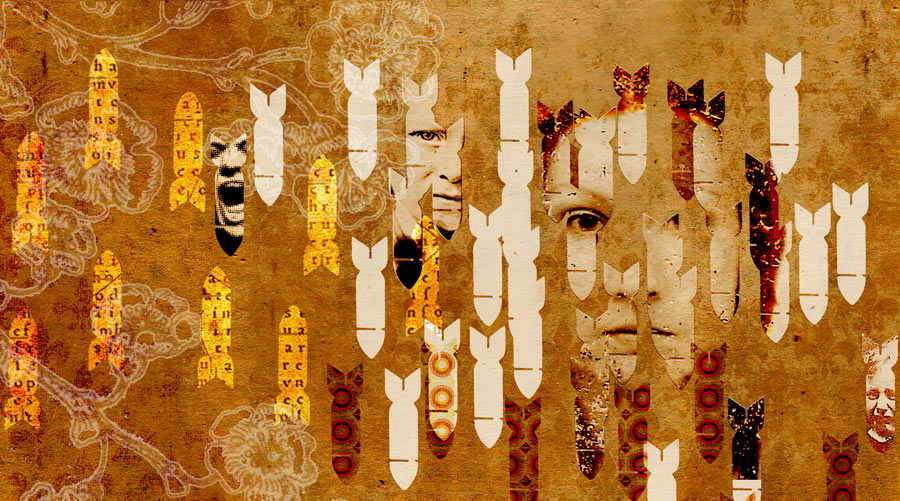
It’s the late 70′s. A six-year old boy finds some Penthouse magazines in his neighbors trash and after reading a story about the infamous Penthouse photographer and publisher Bob Guccione, decides his mission in life is to be “Bob G.”, in spite of his parents’ attempts to point him down a more respectable career path.

This hilarious, touching short story is from the pen of Archer Adams, a writer from Montgomery, Alabama and is available on Amazon. If you like David Sedaris, Jean Shepherd, you’ll love Adams.

Pixels passing in the night

But this is also a story about how collaboration happens in the digital world. Adams was all set to design his own book cover and contacted Foolish Fire via email after finding downloadable chalkboard backgrounds on the FF site. Not being a designer, he offered to hire me to do some hand-lettering as one option for his cover but quickly realized that Sedaris had used the chalkboard motif for his highly recognizable book Me Talk Pretty One Day and nixed that idea.

So step one…I asked Archer to send me his story to mine for inspiration and he basically had me hooked like a fish farm trout from the first paragraph. By the end I’d laughed so hard I nearly had to re-upholster my Herman Miller. The story stirred up a riot of imagery and after some brainstorming and a quick negotiation, we arrived at the solution you see here, sorta chalkboard-y but not literally, leveraging the hand-lettering to retain the innocent quality of the narrative and incorporating this freakishly bang-on image of the kid with the camera (which ironically could have been me at that age). The whole process took a few days.

Girl 1 for Bob G.

The first run at a typical Penthouse model from the 70′s.

As it turned out the girl on the left was the hardest element to get right, requiring several iterations and copious “research” on vintage Penthouse models on my part, which also turned out to be a very interesting exercise in explaining stuff to my wife. Deftly handled by yours truly I might add, except for “the forgetting to take down the reference print outs I had taped to the walls” in a timely enough fashion.

Call me “old school” but doing random projects like this still brings me back to that first, naive, emotional experience of sitting up in my bedroom with my new, beige Power-Mac G-Series I’d just bought at Sears. I recall the exact moment like it was yesterday…signing onto the “World Wide Web” for the first time with a non-graphical user interface and within seconds chatting with someone in Australia about sailing, in real-time on a fledgling online community called “The Well”. I knew nothing about sailing but it didn’t matter. Almost 20 years later, I still experience a rush when these kinds of serendipitous connections happen and better yet when ones and zeroes beget pixels beget book covers.

Stay tuned for much more from Archer Adams.

Travels Through Europe :: Concert poster

Danville Band Poster

I don’t often post work from my day job on Foolish Fire, preferring more illustrative pieces that contain hand lettering, but I thought for a change of tone I’d share this recent Danville Community Band concert poster.

For any design deets geeks out there, it was executed in Illustrator CS4, the font is Brandon Grotesque.

An ode to the joy of self propulsion

an Ode to the Joy of Self Propulsion

I am reminded that Bike to Work Day is coming up in early May. Since my commute consists of a ten-foot walk from my bedroom to my office, biking to work would not be practical (or safe) but I thought the quote above and essay below seemed appropriate. Tolstoy said this after he was publicly criticized for learning to ride a bicycle at age 67.

I’m a little wistful tonight. As I sit in my living room recovering from a short, hilly ride on a quiet Monday morning in late April, I’m thinking of past rides out to Tilden, and missing the cycling from years past, especially with my two nephews and my brother-in-law. It was a period when our lives and schedules miraculously converged and 50+ miles was considered an average distance for most any Saturday from March to October.

When the world closes in, as it does occasionally, and all I see are dark clouds on the horizon I think of those rides, pedaling through the redwoods on Pinehurst Road, my nephew Zachary pulling up along me side just to say “it doesn’t get much better than this.” And while I would tend to notice the potholes and discarded fast food containers on the side of the road, he could somehow stay immersed in the place, the redwoods, the smell of something blooming. His incessant positive outlook shook me out of my half-emptiness.

We laughed a lot on those rides. There was merciless ribbing and we talked about bikes ad nauseum and told the same stories about the same past rides as if repeating them at different mile markers on different days gave them new life. But in a way, every ride, even on familiar terrain, is a new narrative, or a new chapter in a continuing one.

There are many things that can make a road ride special; the weather, the traffic, the close calls, the near spills, the encounters with bees, snakes, squirrels, deer, angry motorists and the small but noteworthy differences in the way each of us feels on this day, today, compared with last time we rode this route. It’s what we monitor and track and share in that space between climbs and descents. Heart rate, leg and butt soreness or lack of, flat tires or the miraculous lack of—we write our cycling histories on each venture out to McEwen Road, Carquinez Shoreline and the Crockett Bridge, Mt. Diablo to the Junction, Mt. Diablo to the Summit, lower Pinehurst, upper Pinehurst, Tilden by way of The Three Bears, the notorious Pig Farm Hill. And these days it’s the Two Bridges Loop, Pinole Loop, the Modified Jelly Belly Ride and on busy weekday afternoons during daylight savings time Short McEwen Frontwards, McEwen Backwards, Cummings Skyway Loop, The Figure Eight of Death (McEwen Backwards Twice), and the Briones Hill.

And there’s the dreaming of better bikes, upgraded components, lighter wheels, the latest training gadget. We talk about bikes like they’re our girlfriends and wives, with familiarity and fondness, and a constant, humbling realization that no matter how much we think we understand how they work, they occasionally leave us stranded by the roadside.

I’ve been trying to find words to describe a particular sensation that I experience while cycling—that of the pushing of the pedal—that basic constituent part of making a bicycle go. It happens most often while standing up out of the saddle and pedaling up a slight incline. I only know it’s a kind of sweet spot where muscle and metal are almost indistinguishable. Where thought becomes effort becomes force becomes a kind of compressed, complex, simple, explosive event.

Maybe it’s a sublime facet of space and time where physics and metaphysics merge. Where the act and actor swap places and the spaces between bike frame molecules absorb a little bit of the rider. It happens many thousands of times on any ride and yet only happens once, on that one low hill, with that slight tailwind, on that cool Saturday morning in April or May, on that quiet, satin ribbon road, when legs and arms and pedals and sweat and heart give one push and then another, and something gives way, and we reach up and fly past our darkest days. I can’t describe it well but I know it doesn’t get much better than that.

So I missed Hairball Awareness Day…but really…isn’t…every day…?

Hairball Awareness Day :: Foolish Fire
There I was minding my own business reading Mary Roach’s new book Gulp: Adventures on the Alimentary Canal, when during a chapter about digestive disorders she just casually mentions in a footnote that Hairball Awareness Day is rapidly approaching. In fact it’s every year on the last Friday of April. Who knew? By the way, (and you might want your kids to leave the room for this), did you know that humans can get hairballs, too? It’s called “Rapunsel Syndrome”, I kid you not. The rest is too disgusting for prime time interweb publication. Read Mary’s book.

So we have two cats, one of which, Eddy, gets a hairball about twice a week and although he’s dumb as a bag of hammers, he has refined his “delivery” with an uncanny, Cy Young award-winning, GPS guided accuracy so as to “deposit” his 6-inch mucous bombs exactly where I will inevitably walk. Love him dearly but seriously…I’m pretty “aware” of hairballs already, thank you. As are most cat owners.

But, being a fan of both obscure holidays and “awareness” in general, I just had to make a little poster in honor of this unfortunate (and sometimes serious) consequence of being both fur-bearing and a neurotic groomer, in other words, being a feline and/or George Michael. I know dogs get them, too, and again…some people, and again…eeewww, but cats got the evolutionary shaft on this one. So let’s cough up a little compassion for our feline buddies, even if it is a few days late.

Think you know how to buy eggs? Get ova yourself.

The Ova Easy Egg Guide

This piece has a two-fold purpose:

  1. A humble attempt to “eggucate” those, who like me, are often confounded by the act of food shopping, and more specifically the buying of eggs.
  2. To introduce my new food blog, Munch Ado About Something: Advocating the Peaceful Overthrow of the American Diet. In this most recent post, you’ll learn how the idea for this infographic was hatched (sorry) and a maybe a few fun facts about eggs, among other articles about food, some serious, most not, but hopefully always delicious.

So for you hand-letterers, here’s a quickie synopsis of the process:

Step 1: Research. Did some looking around on the USDA site, the American Egg Board site, etc. to get the bulk of the info for this piece. My goal was to make it fun, easy to use but to also express my point of view. I try to answer one, simple, overarching question in an infographic — this time it was “How can the average consumer buy the healthiest, most sustainably produced eggs?”

Step 2: Serving Up the Chicken. I knew I wanted to do a painting of a chicken for a lead image, because I find chickens to be quite beautiful visually. So I found an image of a Barred Rock Hen in my stock photo library (who knew?) and did a gouache painting from it.

The lead chicken art

Step 3: The Background. I wanted a somewhat grungy, barnyard-y, rough-hewn look but that didn’t obscure the hand lettering, some of which would be fairly small. So I found a high-res background file of an old, faded, blank book page, which had some natural vignetting and layered a lo-res piece of ephemera of a beat up old landscape painting over the top, and masked all but the outer edges.

Free blank book texture

Old piece of ephemera

Step 4: The Title Text. Using a decorated, vintage font as a basis for the “Egg Guide”, first did a pencil sketch, then inked in the lettering, scanned the text and placed it a layer in the base, hi-res Photoshop file.

Here’s a Photoshop Phactoid: the 300 dpi Photoshop file at one time contained over 200 layers and weighted in at over 600 MB! But, worth it if I ever want to use it for print applications. The final piece shrank down to 120 layers and 187 MB.

Main Title Lettering

Step 5: The Innards and Giblets. Most of the other text bits were done in pieces and scanned separately for easier handling, which explains all the layers.

Hand-lettered text

Step 6: The Dozen Eggs. Those other (12) little eggs were actually painted digitally in Corel Painter, but only once. Eggs are way too identical to warrant 12 separate paintings.

Step 7: Free Range Chickens All Over the Studio. I knew I wanted augment the Rating Guide at the bottom with at least one more chicken so I did a few gesture studies to give me some choices. Holy crap was it hard to get those chickens to pose!

Chicken studies

Step 8: Edit, Clean Up, Get My Wife’s Feedback. Wait, Reverse That.

Maybe the only good thing about those annoying little fruit stickers

Who knew? These stupid little label things actually house useful information.

Who knew? These stupid little label things actually house useful information.

So I’ve been thinking a lot lately about food. No, not because I’m hungry, well maybe a little, but more because I’m intrigued by the whole subject of food, as a thing, a human activity, a cause celebre, an addictive substance, a political movement, and the subject of eleventy-billion blogs. You know…that food.

And in the course of my reading up on it, pondering it, eating it and engaging in a little of my own fork rattling around it on another blog I’m starting called “Munch Ado About Something”, I’ve happened upon some cool, very useful and surprising factoids, which I feel compelled to share. Like, the fact that sticky fruit labels don’t only exist to annoy us, leave glue on our apples and end up on the bottoms of our shoes. They serve a useful function as well, like telling us if they’re conventional food, real food, or frankenfood. Who knew? I didn’t.

So maybe you don’t care about where your fruit comes from. That’s fine. But I can tell you that lots of big corporations and lawyers and stockholders and accountants and bankers and politicians would prefer if you didn’t ask. And that’s all the lefty, tree-hugger, foodanista sermonizing I’ll do for now. Class dismissed. But…just a warning…I’m pretty much obsessed with the whole “advocating the peaceful overthrow of the Standard American Diet” these days, so you may see a few more little appetizers like this one. Bon apetit.

You Are What You Eat Eats :: Michael Pollan

You Are What You Eat Eats :: Michael Pollan

A quote from Michael Pollan, from his book “In Defense of Food: An Eater’s Manifesto.”

I’ve always loved Michael Pollan’s take on the quote, “You are what you eat,” made famous by cookbook author and early proponent of the organic food movement Adelle Davis in the 60′s. The quote probably had even earlier roots going back to 1826 where it was coined by Anthelme Brillat-Savarin—rough translation, “Tell me what you eat and I will tell you what you are.”

Decapitated Velociraptor: A Love Story

compatibility-chart
Once upon a time when my wife and I were dating and starting to talk about cohabitation, we had that “negotiation” to decide what items we would pool in order to decorate our new apartment. Both being artist-types and somewhat fussy about our space, we each had very specific ideas about how to curate our new combined collection of “objets d’art”. On most things we concurred, but I had emotional ties to a couple of pieces, the severing of which could prove to be painful i.e.

1. A mid-century, plaster of paris lamp depicting some African or Egyptian royal personage w/red lampshade. REJECTED.
2. The mounted skeletal leg of a small antelope (had an extra mutant patellar bone which made it super cool). REJECTED.
3. One stuffed piranha. REJECTED.

Suffice to say in the interest of corporate harmony and fairness, these objects were relegated to the attic (along with a few of hers) and in the process I learned some very valuable lessons about my roommate and eventual partner-to-be. Since then our interior design discussions have been non-contentious for the most part, but that’s because I thought I knew where to draw the line. Until yesterday…

While perusing a stall of vintage clothing and curiosities at the Treasure Island Flea Market on a pristeen San Francisco morning, I hear, “James…James…over here. There’s a velociraptor head under this table!” Cut to the scene in “Up” where the dog sees a squirrel.

To digress, there are a couple of ways to bring out the 9 year-old in me:

1. Tell me there’s a new Dr. Who episode.
2. Say, “James…James…over here. There’s a velociraptor head under this table!”

Indeed, there was a shockingly life-like and life-sized Velociraptor head, like a frozen 3D slice of discarded Jurassic Park footage wedged under a mid-century end table and up against a portable toilet disguised as a hat box. The next few minutes are still a blur. I only remember babbling something incoherently and handing over a wad of bills like a detoxing crack addict to a nice vintage-y woman with bright red lipstick and cateye glasses, who smiled and said she’d set it aside for us.

My wife immediately updated her Facebook status: “Been at the Flea Market 5 minutes, already bought a velociraptor head. Oops.”

This from the woman who vetoed my African lamp, refused to suffer my mutant antelope leg and nixed my stuffed piranha? I could only come up with 4 possible interpretations:

1. GLASS HALF EMPTY VERSION: Our relationship had devolved to the point where we need to supplement with life-sized reptile replicants just to stay awake. Ack. REJECTED.
2. GLASS HALF FULL VERSION: My wife got cooler when I wasn’t looking. A. Lot. Cooler.
3. DRUG RELATED: Some chemical in the hand-stamp ink is reacting with the receptors in her brain that affect tasteful office decor.
4. She’s taking the whole “eating Paleo” thing to a whole other level.

No matter. I gazed at her like a lovesick irish setter, slack jawed, re-smitten. Saturday morning cartoon pulsating heart on a spring heart-shaped eyes.

Take away: Surprise is the sexiest thing there is.

Meet the new Art Director

Meet the new Art Director. And no, Sally, it didn’t cost us an arm and a leg.

Love is a Hole in the Heart–Ben Hecht

Love is a Hole in the Heart--Ben Hecht

Take this any way you want. I think it’s kinda bittersweet.

A second love quote in the run up to Valentine’s Day. When I read this it initially struck me as tragic and dark, but it may also have a flip side—love does create space for the “other”, and often in filling that void makes the heart grows more full than before. Either way it speaks to me. Enjoy. Or not.

“Love is a smoke made from the fume of sighs”–William Shakespeare

"Love is a smoke made from the fume of sighs"--Shakespeare

One of my favorite love quotes. More to come as we edge toward V-Day.

A favorite love quote by the Bard. In case anyone’s interested, here are some general details about how this piece was created. As most of my work these days tends to be, this piece involves working back and forth between hand lettering, Photoshop and Illustrator:

  • First, the background and “smoke” shape was drawn as a vector shape in Illustrator and placed in the base Photoshop file. The whole thing was printed out and the shapes traced onto paper where the lettering would be drawn.
  • The text was hand lettered by pencil, using the base shapes as a guide, then inked, scanned and opened in Photoshop where it was cleaned up a bit and the contrast increased with Levels, using the white and black set point “thermometers.”
  • A copy was pasted onto a blank Illustrator document (the same size and resolution as the final piece) and Live Traced. Once the text was in vectors, a copy was pasted back into the base Photoshop file. More clean up.
  • Once all text was in place, the final adjustments to text layers was made. This is always a case of playing with blending modes, transparency and color until the right look is achieved.
  • The face shape was created separately in Illustrator and the filled shape pasted into the base Photoshop file. Shadowing and detail were added in subsequent layers.

Tip: If you like this kind of thing but you want to avoid the “totally from scratch” hand-lettering part, stay tuned for our next, free tutorial that involves setting text in Illustrator, Word, et al and tracing. A great way to get comfy with basic letterforms and give your creations a hand-lettered-ish look.

Skills used: pencil and ink drawing, layering, using blending modes, masking, scanning, cleaning up, lasso tool for selections. Resources used: Photoshop CS4, Illustrator CS4, vintage background textures collected from ephemera sites, Wacom tablet, flatbed scanner, #2 pencil and sharpener, various thicknesses of artist’s fine line ink pens. Time to complete: App. 6 hours.

%d bloggers like this: